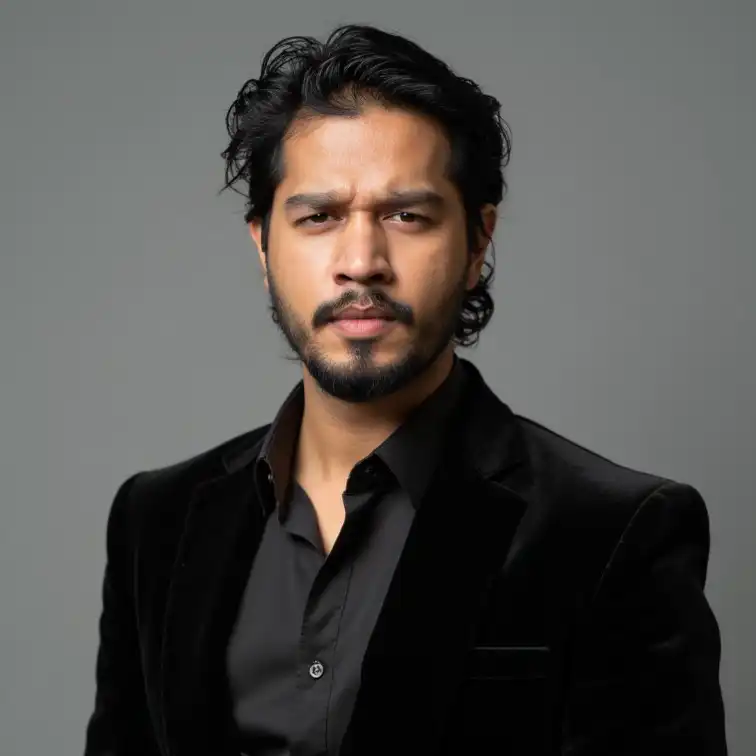
Echoes at Taj: Producing a 14-Track New Age Album Solo
Producing a new age album solo in 2015: how Echoes at Taj split 14 tracks across three families, why the Hindi cadence paused, what Studio One held.
Echoes at Taj is a 14-track new age album released by Abhishek Chaudhary in 2015, produced solo over a six-month window from January to June of that year. The record is a deliberate global / English-language pitch: three English-vocal pieces, ambient instrumentals with piano, sitar, flute, and harmonium session players, and two Western classical covers in modern ambient treatment. I tracked it in PreSonus Studio One and paused my Hindi/Urdu release cadence for the full six months. This post is the production walkthrough, not the submission story.
TL;DR
- Echoes at Taj shipped 14 tracks in six months (January to June 2015) by splitting the record into three families: English vocal, ambient instrumental, Western classical cover.
- I called this the three-family album: each family had its own tracking discipline, and scoping the record by family is what made 14 tracks in 26 weeks possible.
- The hours were 16+ a day for three to four of the six months. The cadence pause was quiet, no announcement; the Hindi back catalogue kept performing organically on YouTube and streaming platforms through the window.
- PreSonus Studio One held the whole record on the M-Audio USB interface from the 2010 era. The 2016 Logic Pro switch would have wrecked the back half of the timeline.
- The submission to the 58th Grammys did not advance. The production decisions in this post are the part worth keeping; the marketing decisions are not.
Why a Hindi artist made a new age album in six months in 2015
In February 2015, Ricky Kej won Best New Age Album at the 57th Grammys for Winds of Samsara, the first Grammy in the new age category for an Indian artist. Bengaluru-based, no major label, the kind of credential that resets what feels possible from this side of the world. By the time the ceremony ended, I had decided to put together a new age record of my own for the next cycle.
That cycle was the 58th Grammys, ballot window closing mid-2015, ceremony February 2016. Backwards from the ballot, that left roughly six months to write, track, mix, master, and release a full-length record. The deadline became the design constraint.
The first decision was honest: a new age record cannot share a release window with the Hindi/Urdu cadence I had been running. Different listener bases, different writing voice, different mixing target. So the cadence paused. From January to June 2015 there were no new Hindi singles. I will call this the cadence pause. It is the single most contrarian production decision in the project, because indie-artist advice tells you to stay in your niche and compound the audience you have. For one record's worth of material, I did the opposite. There was no public-facing announcement to the Hindi/Urdu listener base; the pause happened quietly. The back catalogue kept performing organically on YouTube and the streaming platforms through the six months, which is exactly why the pause worked: the audience I had was not waiting for me to post every week.
The submission story lives in submitting to the Grammys from India. The submission did not advance; Paul Avgerinos won the 58th cycle's Best New Age Album for Grace. This post stays on the production decisions.
The three-family album: scoping 14 tracks in six months
A 14-track record in 26 weeks averages two weeks per track for write-plus-track-plus-mix. That math does not work if every track is a unique scoping problem. It works only if tracks come in families, and each family carries shared tracking discipline, mix template, and reference set.
The three families:
- English vocal (3 tracks): Thirst, Existence, Suffering. Lead vocal in English, vocal-forward arrangements over ambient bedding.
- Ambient instrumental (9 tracks): Awareness, Enlightenment, Birth, Sensation, Manifesting, Womb, Attachment, Appreciation, Passing Away. No lead vocal, session players on piano, sitar, flute, harmonium.
- Western classical cover (2 tracks): Joy (Chopin Nocturne Op.9 No.2) and Transmission (Moonlight Sonata, Beethoven Piano Sonata No.14). Modern ambient treatment, canonical melody preserved.
Family 1 needed lyric writing time. Family 2 needed arrangement and session-player time. Family 3 needed adaptation time without writing overhead. A 14-track scope across three families is not 14 problems; it is three pipelines with a shared mix bus. Full tracklist on Echoes at Taj on Spotify.
Family 1: the three English vocal tracks
Thirst, Existence, Suffering. Three lyric pieces in English, in a six-month window where every other lyric I had written for years had been in Hindi or Urdu.
The language switch is the under-discussed part of the record. Hindi vocal phrasing on a slow song sits in a different register than English vocal phrasing: different vowel shapes, different consonant attack, different breath placement on a long held note. I had been tracking Hindi vocals through a Shure SM58 since 2010, a Nirvana / Cobain influence and a stage-tested rock mic that handles dynamic performance; the SM58 tracked every vocal on Echoes at Taj, including all three English-vocal pieces. The post-2015 switch to a Rode NT1-A condenser came later.
The English tracks did not get a separate vocal chain; they got a separate vocal approach: less rock projection, more breath, more space. The bedding is the same ambient palette as the instrumental family, so the vocal pieces feel like moments where the language asks for words, not a different record.
Three out of 14 is a deliberate ratio. The sequencing places a vocal anchor early (Thirst, track 2), middle (Existence, track 5), late (Suffering, track 10).
Family 2: the ambient instrumentals
Nine tracks: Awareness, Enlightenment, Birth, Sensation, Manifesting, Womb, Attachment, Appreciation, Passing Away. This is the body of the record. The naming traces a sequence through states of being, in the new age tradition of titling around contemplative themes.
These tracks live or die on instrumentation. Four session-player instruments: piano, sitar, flute, harmonium. They do not normally share an arrangement, which is part of why the record sits in new age rather than world or Indian classical. The sitar and harmonium pull toward Indian classical; the piano pulls toward Western chamber and film score; the flute floats between. All four on the same record, with ambient pad textures underneath, is the new age move.
Some layers I tracked myself in my home room (keyboard pads, harmonic bedding); some required players whose hands have done the thing for decades. For session work in Delhi I hired a studio in the Lajpat Nagar area whenever the arrangement needed a piano, flute, or harmonium player in a proper tracking room. For one of the sitar layers, distance was too much to bring the player in: a sitarist from Kolkata tracked remotely, sent stems back, and I composited the part into the arrangement in Studio One. The home room held my own tracking; hired Delhi studios and remote stems carried the session musicians.
Tracking template, identical across all nine: tonal centre and tempo first, ambient bedding second, melodic instrument third, vocal harmonies as texture last. A nine-track family with one template is the only way nine tracks finish inside a six-month window.
Family 3: the two Western classical covers
Track 8: Transmission (Moonlight Sonata). Track 13: Joy (Chopin Nocturne Op.9 No.2). Two of the most-recognised piano pieces in the Western canon, given a modern ambient treatment.
These are not arrangements in the sense of "play it through on piano and add some pad". The Moonlight Sonata first movement (Adagio sostenuto) and the Chopin Nocturne Op.9 No.2 are pieces I had lived with since the 1990s cassette and CD audiophile era, when most of what I listened to was Mozart, Beethoven, and Chopin on the family stereo. Reference is the only thing harder to fake than execution.
The treatment decisions:
- Keep the melodic contour verbatim. The line is why anyone is here.
- Move the rhythmic feel from notated classical phrasing toward a slow ambient pulse. Hold the piano gestures longer; let pad textures fill the rests.
- Rename the tracks. Calling track 8 "Moonlight Sonata" sets up a comparison the cover will lose. Calling it Transmission, with the source surfaced in the subtitle, lets the cover live as its own piece while crediting the source.
Outbound: Beethoven Piano Sonata No.14 on Wikipedia and Chopin Nocturnes Op.9 on Wikipedia. Both pieces are public domain; the cover treatment is the new copyrightable work. Two covers on a 14-track record anchors a new age listener who recognises the canon without turning the album into a covers project.
Why Studio One was the right DAW for this album
The whole record was tracked, arranged, mixed, and mastered in PreSonus Studio One on Windows. The 2013-to-2016 Studio One window was the most productive DAW era of my 15+ year arc. Three things mattered:
- Arranger track for ambient sequencing. Most instrumentals do not have hard verse-chorus structures; they evolve through textural sections. The arranger track let me move sections around without re-cutting audio.
- Bus routing that did not get in the way. A new age mix bus needs to be quiet, warm, and well-behaved on long-tail reverbs. Studio One's bus structure was the cleanest path I had worked with.
- Free muscle memory. Same DAW since 2013. A six-month deadline has no room for re-learning a tool.
The cautionary tail: I switched to Apple Logic Pro in 2016 on a hardware-driven move to Mac and lost months to re-learning command keys, plugins, and workflow. If the switch had happened six months earlier, the album would not have shipped. Full retrospective in the DAW switch I regret.
The interface on the desk for the Jan-Jun 2015 sessions was still the M-Audio USB box from the 2010 era. The Focusrite Scarlett Solo switch came later, and the Audient EVO 8 is the current interface since 2022. Two things to keep in mind about the M-Audio in 2015: the ASIO drivers were stable enough by then to do the job, and the cleanness of the M-Audio preamps was never the bottleneck on an ambient record where most of the air sits in the reverb tail, not the interface noise floor.
What the six-month timeline forced (and what it broke)
The cadence pause and the three-family scope made 14 tracks in 26 weeks possible. The six-month deadline also broke things:
Too much time went into producing the album to perfection and not enough into PR and marketing the release ahead of the submission window.
That is the honest 2026 read on 2015. Grammy ballots reward records that have a release history, distribution footprint, voter awareness, and press presence at the moment voting opens. None of that happens in the same six months spent tracking 14 ambient pieces in a home room. The production-perfection trap is real: when the deadline is yours to set, you keep moving the mix one more day, and the days come out of the marketing budget that you also owned.
The hours were 16+ a day for three to four of the six months, every day, on the album and nothing else. That envelope is what made 14 tracks in 26 weeks possible at all. It is also exactly what made the post-release marketing slip: there were no hours left over once the production envelope was fully spent.
The scope itself I would keep. Without it, the record does not finish.
FAQ
How many tracks are on Echoes at Taj and how are they split?
Echoes at Taj has 14 tracks, released in 2015. Three English vocal pieces (Thirst, Existence, Suffering); nine ambient instrumentals (Awareness, Enlightenment, Birth, Sensation, Manifesting, Womb, Attachment, Appreciation, Passing Away); two Western classical covers (Transmission / Moonlight Sonata, Joy / Chopin Nocturne Op.9 No.2). I think of it as a three-family record, which is how the scoping fit inside a six-month production window. The full tracklist is on Spotify.
Why pause the Hindi release cadence to make an English new age album?
The two release pipelines could not share a window: different voices, different listener bases, different mixing references, different writing target. From January to June 2015 there were no new Hindi or Urdu singles; every studio hour went into Echoes at Taj. The pause was quiet, no announcement to the listener base, and the back catalogue kept performing organically on YouTube and the streaming platforms through the six months. The Hindi cadence resumed after the album shipped. Pausing one cadence to ship a different body of work is the inverse of "stay in your niche", and I would make the same call again for a record's worth of material.
What DAW and interface was Echoes at Taj recorded on?
PreSonus Studio One on Windows, into an M-Audio USB interface from the 2010 era. Studio One was my DAW from 2013 to 2016, the most productive window of my 15+ year arc. The arranger track held the textural sections of the ambient instrumentals; the bus routing handled long-tail reverbs cleanly. The interface upgrade to Focusrite Scarlett Solo came later. The 2016 switch to Apple Logic Pro broke flow for months; if it had happened mid-2015, the album would not have shipped before the submission window closed.
Who played sitar, flute, harmonium, and piano on the record?
Echoes at Taj layered piano, sitar, flute, and harmonium across the nine ambient instrumentals, with session players brought in where the arrangement called for hands that had done the thing for decades. For piano, flute, and harmonium I hired a studio in the Lajpat Nagar area of Delhi and tracked the players in a proper room. For one of the sitar layers a player in Kolkata tracked remotely and sent stems back, which I composited into the arrangement in Studio One. I held the producer seat and tracked the keyboard pads and harmonic bedding from my home room. Session credits sit on the album metadata.
Why cover Moonlight Sonata and a Chopin Nocturne on a new age record?
Beethoven's Moonlight Sonata first movement and Chopin's Nocturne Op.9 No.2 anchored my listening through the 1990s cassette and CD audiophile era, before I owned a DAW. Covering them on Echoes at Taj as Transmission and Joy was a credibility move for a new age listener who recognises the canon: keep the melodic contour verbatim, move the rhythmic feel toward a slow ambient pulse, rename the tracks so the cover lives as its own piece while crediting the source. Two covers on a 14-track record anchors without turning the album into a covers project.
Did Echoes at Taj win or get nominated at the Grammys?
The album was self-submitted to the 58th Annual Grammy Awards in the New Age category (2015 cycle, February 2016 ceremony). It did not advance to final nominees. The category winner that cycle was Paul Avgerinos for Grace; other final nominees were Madi Das (Bhakti Without Borders), Catherine Duc (Voyager), Peter Kater (Love), Ron Korb (Asia Beauty). My retrospective: too much of the six-month window went into producing the record to perfection and not enough into PR and distribution ahead of the ballot. Full submission walkthrough lives in the Grammy-submission post.
Could you make a 14-track new age album in six months again today?
The scoping decision is still right: three families, shared templates per family, one DAW, one room, a paused parallel cadence. What I would change is the marketing and distribution budget. In 2015 the production deadline was the design constraint and the marketing slipped; today I would run a release campaign in parallel with back-half mixing so the record arrives with voter awareness, press presence, and distribution footprint established. The production playbook holds; the marketing playbook is the part that did not.
What Echoes at Taj taught me about scoping an album
Three families instead of 14 unique problems. One DAW, no tool switches mid-record. One home room for my own tracking, hired Delhi studios for session players in the room, remote stems for the players too far to bring in. One parallel cadence paused, one deadline as the design constraint, 16+ hours a day for three to four of the six months as the envelope that paid for it. None of that is new age advice; it is project-scoping advice that happens to apply to a record. The decisions I would not keep are production-perfection eating the marketing budget, no release campaign in parallel with mixing, no voter awareness work before the submission window opened.
The catalogue around this album sits on /about and /press. The Hindi-side production work in the same Studio One era is anchored by Alvida and Aaj Bhi. The three disciplines I run today (entrepreneur, software architect, singer-songwriter) all use the same scoping discipline; this record was the place I first practised it on a creative deadline I owned.